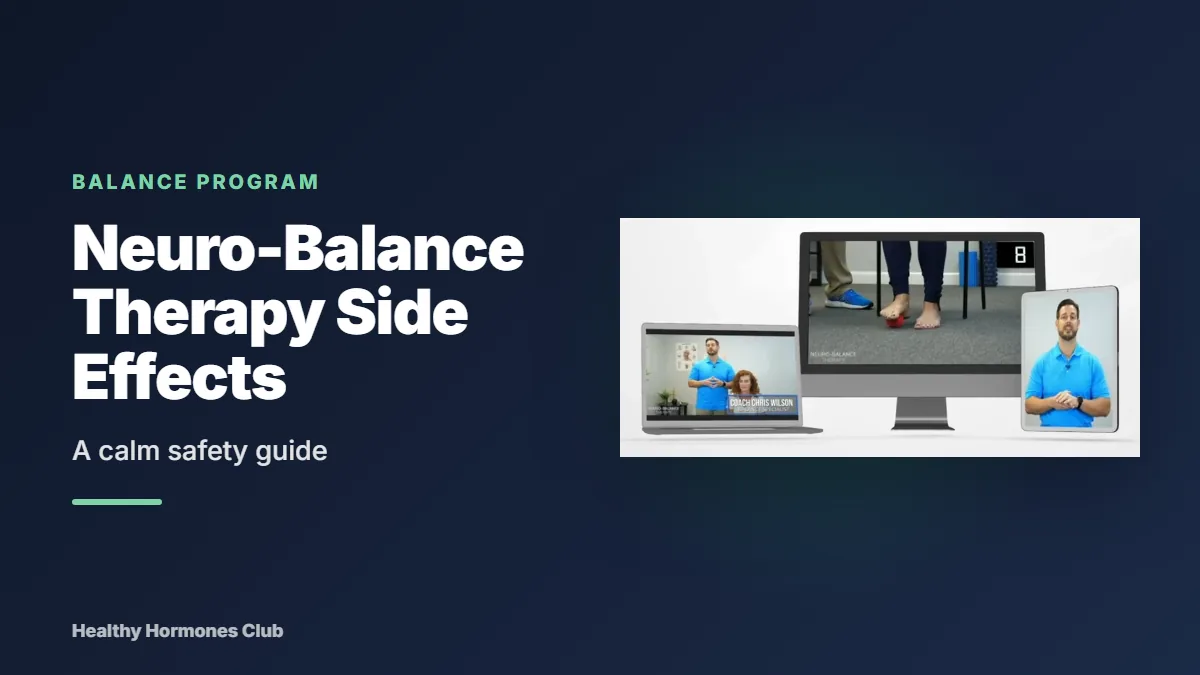
Starting a new routine is a positive step, and a few calm habits make it a smooth one. This guide covers Neuro-Balance Therapy side effects and safety: what to do before day one, how to set up your space, what to watch for and when to ask for advice. It is a gentle follow-along program, and you stay in control of the pace.
Start Gently, at Your Own Pace
Three levels let you begin with the Beginner sequence and move up only when you feel ready, with 60 days to decide if the routine suits you.
Get Instant Access for $37
60-Day Money-Back GuaranteeTable of Contents
- Neuro-Balance Therapy Side Effects: The Short Version
- What the Seller Says
- Before You Start
- While You Exercise
- About the Spike Ball
- When Unsteadiness Needs a Medical Check
- Everyday Habits That Go With It
- Your Guarantee Is a Safety Net
- Our Take
- Making Your Routine More Comfortable
- Who Should Be Extra Careful
- Frequently Asked Questions
Neuro-Balance Therapy Side Effects: The Short Version
Neuro-Balance Therapy is an exercise routine, not something you swallow or apply, so there is no formula that can react with your medicines. The things worth thinking about are the ones that go with any new exercise: tired muscles, doing too much too soon and moving safely.
- Ask your doctor or physical therapist first.
- Do every move next to a sturdy chair or counter.
- Start with the Beginner sequence and go at your own pace.
- Stop if you feel pain or unwell.
- Skip the spike ball on broken skin or numb feet unless your doctor agrees.
What the Seller Says
The seller’s terms say that the program is not a substitute for medical advice and that you should consult a health care professional before acting on it. The seller describes short sequences at Beginner, Intermediate and Advanced levels. We agree with the cautious approach, and the rest of this guide adds our own general advice.
Before You Start
Talk to your doctor or physical therapist
This is the most useful step, and it takes one conversation. It matters most if you have had a fall or surgery, feel dizzy, have neuropathy or numb feet, have a joint replacement or osteoporosis, take medicines that can affect balance or blood pressure, or have any medical condition. A professional can tell you whether a home routine fits and which moves to skip.
Set up a safe space
Put a sturdy chair or kitchen counter within reach, clear the floor of rugs and cords, make sure the lighting is good and choose stable footwear or a non-slip surface.
Begin With Confidence
Follow-along lessons, a digital manual and a free bonus guide for a one-time $37, backed by a 60-day guarantee.
Start My Balance Routine
Instant Download · One-Time PaymentWhile You Exercise
- Go at your own pace. If a move feels too hard, pause the video, sit down and come back later.
- Keep support within reach. Hold the chair or counter, and use a supportive seat for floor-based moves.
- Breathe steadily and keep your shoulders relaxed.
- Expect some tiredness at first, as with any new routine, and rest when you need to.
- Stop at once if you feel pain, dizziness, chest discomfort or shortness of breath, and get medical help if it does not pass.
About the Spike Ball
The seller’s sequences use a spiky massage ball, which the physical edition includes and the digital version does not. If you use one, apply gentle pressure, especially at first, and skip it on broken skin, bruises, sore spots or numb feet unless your doctor agrees. Keep it away from children and pets.
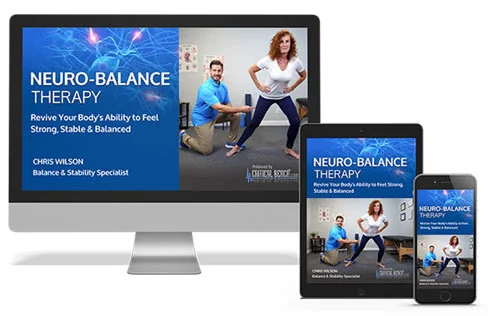

When Unsteadiness Needs a Medical Check
A routine like this is about feeling steadier, but unsteadiness itself deserves attention. A fall, or new or unexplained unsteadiness, deserves a medical check. It can have causes, such as medicines, blood pressure, eyesight or the inner ear, that a doctor should look at. A home program is not a replacement for that.
Everyday Habits That Go With It
These are general good sense, not claims about the program.
- Wear sensible footwear around the house.
- Keep walkways clear and the lighting bright at night.
- Stand up slowly from a chair or bed.
- Keep up with eye and hearing checks.
- Ask your pharmacist whether any of your medicines can make you dizzy.
The program also includes a free home-safety checklist, Top 20 Tips, for digital buyers, which is a convenient way to look at your rooms with fresh eyes.
Your Guarantee Is a Safety Net
Feeling comfortable with your purchase is part of safety too. The program comes with a 60-day money-back guarantee, so if you or your doctor decide it is not right for you, digital buyers ask for a refund through ClickBank order support, and DVD buyers return the DVD at their own postage, with the refund excluding shipping and handling. Our guarantee guide has the steps.
Our Take
Neuro-Balance Therapy is built as a gentle, follow-along home routine, and starting it well takes just a little planning. Check with your doctor, use sturdy support and keep the pace comfortable. For more, see our review, the what’s included guide, the Neuro-Balance Therapy safety page and the hub.
Making Your Routine More Comfortable
A few simple tweaks help many people.
- Warm up gently before the lesson, with a short walk around the room.
- Wear comfortable clothes you can move in.
- Use a good light so you can see the coach and the floor.
- Keep water nearby.
- Stop for the day if you are tired, and come back tomorrow.
Who Should Be Extra Careful
Some readers have a good reason to take more care, and a doctor or physical therapist can help them most.
- After a fall or surgery. Ask before you start, and ask which moves to avoid.
- With dizziness or unexplained unsteadiness. Get it checked first.
- With neuropathy or numb feet. Ask before using the spike ball or any balance move.
- With a joint replacement or osteoporosis. Ask which positions and moves are suitable.
- While taking medicines that can affect balance or blood pressure. Ask your pharmacist or doctor.
None of this is meant to put you off. It is the same advice any careful trainer would give, and one short conversation lets you start with confidence.
Start Gently and Stay in Control
You set the pace with three levels, a sturdy chair and a 60-day money-back guarantee to back your purchase.
Start My Balance Routine
Instant Download · 60-Day GuaranteeFrequently Asked Questions
Does Neuro-Balance Therapy have side effects?
It is a gentle home exercise routine, not something you take, so there is no formula to react to. As with any exercise, some people feel muscle tiredness at first, and you should stop if you feel pain, dizziness or unwell.
Is Neuro-Balance Therapy safe?
It is designed as a gentle routine with Beginner, Intermediate and Advanced levels. Ask your doctor or physical therapist first, do the moves next to a sturdy chair or counter and go at your own pace.
Should I ask my doctor first?
Yes, especially after a fall or surgery, or with dizziness, neuropathy, a joint replacement, osteoporosis or any medical condition. The seller’s terms say the program is not a substitute for medical advice.
Is the spike ball safe?
A spike ball can bruise sensitive skin. Skip it on broken skin or numb feet unless your doctor agrees, and use gentle pressure.
What if I feel dizzy or unsteady?
Stop and sit down. A fall, or new or unexplained unsteadiness, deserves a medical check, because it can have causes such as medicines, blood pressure, eyesight or the inner ear.
Can I get my money back if it does not suit me?
Yes, within 60 days. Digital buyers ask through ClickBank with a Refund Request. DVD buyers return the DVD at their own postage, and the refund excludes shipping and handling.
Ready When You Are
Begin with a gentle sequence, a sturdy chair and a plan to go at your own pace.
Get Neuro-Balance Therapy for $37
60-Day Money-Back Guarantee