It is smart to ask about safety before you add anything new to your day, and that includes a short audio. If you are wondering about The Brain Song side effects, here is the reassuring headline: The Brain Song is a 12-minute digital audio that you listen to, not something you swallow or apply. That shifts the practical questions toward how you listen, where you listen and your own health history. This guide walks through each in a calm, sensible way.
One note up front: this is general listening advice, not medical advice. For a one-time $39 with a 90-day money-back guarantee, you can try the audio at your own pace and stop whenever you wish.
A Gentle 12-Minute Routine You Control
Choose your volume, your spot and your pace, with 90 days to decide.
Get The Brain Song for $39
90-Day Money-Back GuaranteeWhat Kind of Product Is It?
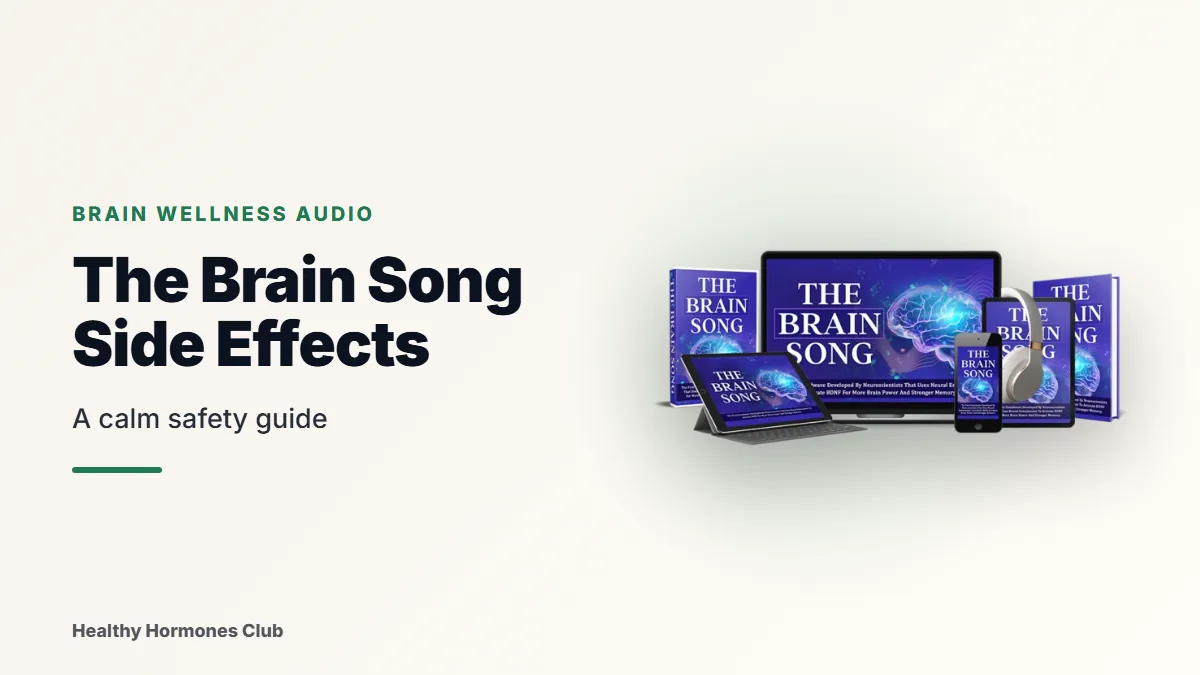
The seller describes The Brain Song as a simple, 12-minute digital audio, delivered digitally, in a relaxing, neuroscience-inspired style meant to support focus, learning and overall mental wellness. The product artwork shows a phone with headphones. There is no pill, no powder and no device to wear, so the safety conversation is the same one you would have for any podcast, meditation track or relaxation audio: keep it comfortable, keep it safe and listen to your own body.
The seller’s terms describe the audio as being for entertainment purposes, and note that brain entrainment is not an exact science. Results vary from person to person, so treat it as a pleasant daily ritual rather than a treatment.
1. Keep the Volume Comfortable
Headphones sit close to your ears, so level matters. A good rule of thumb is to set the volume lower than you would for music. If you cannot hold a quiet conversation with one earphone out, it is probably too loud. Set the level before you press play, and leave it alone. There is nothing in a 12-minute relaxation routine that needs to be loud, and a lower level makes it easier to settle into the session.
- Start low and raise it a little if you cannot hear well.
- Take headphones off after the session instead of leaving them on.
- If you notice ringing or discomfort afterward, rest your ears and use a lower level next time.
2. Never While Driving or Operating Machinery
This is the simplest rule, and the most important. The Brain Song is made for a quiet, set-apart moment at home. Do not listen with headphones while driving, cycling, using power tools or operating machinery, or in any setting where you need to hear what is around you. A good habit is to sit or lie down comfortably, which also helps you get the most from the session. Our guide on how to use The Brain Song shows how to set the scene.
Safe, Simple and Easy to Fit Into Your Day
Quiet corner, headphones, comfortable volume.
Start listening today
One-Time Payment3. When to Ask a Doctor First
Most people can enjoy a relaxing audio without special preparation. Still, a short conversation with a healthcare professional is wise in a few situations:
- A history of seizures. Sound-based routines that use steady rhythms are the kind of thing worth running past your doctor first if seizures are part of your history.
- Hearing aids or other hearing devices. Ask your doctor or audiologist how headphones and extended listening fit with your device, and what level is right for you.
- Any medical condition where you are unsure. If you are being treated for a neurological or mental health condition, check that the routine suits your care plan.
- Pregnancy or other life circumstances where you prefer extra reassurance. A quick question never hurts.
The Brain Song is not a substitute for professional care, and nothing the seller or this page says should replace your doctor’s advice about your own health.
4. Listen to Your Body
The simplest safety tool is your own comfort. Stop the audio, remove your headphones and rest if you feel dizzy, uneasy, unusually tired or if you get a headache while listening. Most people will not need to, but the habit is a good one for any new routine. If the feeling lingers or worries you, speak with a healthcare professional. You can always try again another day at a lower volume, or decide the routine is not for you.
A Quick Safe-Listening Checklist
| Check | What to do |
|---|---|
| Volume | Comfortable and lower than music |
| Setting | Quiet, seated or lying down, at home |
| Driving or machinery | Never while doing either |
| Seizure history | Ask your doctor first |
| Hearing devices | Ask your doctor or audiologist first |
| Discomfort | Stop, rest, seek advice if it lingers |
What to Expect From a Short Audio Routine
Most of what you will notice is the experience of the session itself: a quiet quarter of an hour with headphones, a steady sound and no screens. The seller describes the sound as relaxing and designed to guide the brain toward Gamma frequencies. We cannot predict how any individual will respond, and we do not promise any outcome, which is part of why the safe-listening basics above come first. If you would like to understand the design idea, our plain-words guide to The Brain Song gamma waves explains it without jargon, and the safety page in the catalog repeats the key points in short form.
A Low-Risk Way to Try It
If you try it and it simply does not suit you, there is a clear exit. The seller states a 90-day money-back guarantee, terms apply, and the terms say that for digital products you may get a refund on any purchase requested within 90 days of your initial purchase. Email [email protected] with your order number, the subject Refund Request and your reason, or ask ClickBank order support. Refunds typically appear 5 to 10 business days later, depending on your bank. The seller’s phone line, +1 251-501-2766, is staffed Monday to Friday, 9 to 5 Eastern time. You can see the whole picture in the The Brain Song hub.
The Bottom Line
The Brain Song side effects question comes down to common sense. It is a listening routine, so keep the volume comfortable, never listen while driving or operating machinery, ask your doctor first if you have a seizure history or use a hearing device, and stop if anything feels off. With those habits in place, a 12-minute daily audio for a one-time $39 and a 90-day refund window is an easy, low-risk routine to try. More pages sit in the The Brain Song hub.
Try It Your Way, at Your Own Volume
A calm 12-minute routine with a 90-day safety net.
Get The Brain Song for $39
90-Day Money-Back GuaranteeFrequently Asked Questions
Does The Brain Song have side effects?
It is a digital audio you listen to, not something you swallow, so the sensible concerns are about how you listen: volume, setting and your own health history. This is general advice, not medical advice.
What volume should I use?
A comfortable level, quieter than you would use for music. If you cannot hold a quiet conversation with one earphone out, it is probably too loud.
Can I listen while driving?
No. Never listen while driving or operating machinery. Use it when you can sit or lie down safely.
Should I ask a doctor first?
If you have a history of seizures, wear a hearing aid or other hearing device, or have a medical condition and are unsure, ask your doctor before trying any new audio routine.
What if I feel uncomfortable while listening?
Stop, remove the headphones and rest. If the feeling lingers or worries you, speak with a healthcare professional.
What if I decide it is not for me?
The seller offers a 90-day money-back guarantee on digital products, terms apply. Email [email protected] with your order number or contact ClickBank.
Start Gently and Listen Safely
Twelve minutes, your volume, your pace.
Start listening today
Terms apply