“Hormone balance” is the phrase that sells most women’s supplements, and it is also one of the vaguest. Products in this category range from menopause formulas and PMS blends to libido support, urinary health capsules and prenatal vitamins. Some target a specific life stage. Others promise to fix mood, weight, sleep and energy all at once, which is usually a sign to read the label more slowly.
What the evidence looks like
The strongest evidence in this whole area belongs to an unglamorous nutrient. Folic acid taken before conception and in early pregnancy lowers the risk of neural tube defects, which is why health bodies recommend it for anyone who could become pregnant.
Menopause products are a different story. Black cohosh, red clover and soy isoflavones are the usual ingredients for hot flashes. Some studies suggest soy isoflavones may ease hot flashes slightly for some women, while results for black cohosh and red clover have been inconsistent. Black cohosh has also been linked to rare cases of liver injury.
For PMS, chasteberry (vitex) has a modest body of small trials, and magnesium and vitamin B6 are commonly used, with limited evidence. Cranberry for urinary tract infections has produced mixed results, with some benefit seen in certain groups and little in others. Evening primrose oil is popular for breast pain and hot flashes, but good evidence for it is scarce.
What to watch for when buying
A few patterns should make you pause:
- Claims that a supplement can replace hormone therapy or “naturally rebalance” all your hormones
- Long ingredient lists where each herb appears at an undisclosed or tiny dose
- Quiz funnels that diagnose a “hormone type” and then sell you a matching subscription
- Reviews that read like copies of one another, or sit on a site with no company address
Who should check with a doctor first
Talk to a doctor or pharmacist before starting if you are pregnant, trying to conceive or breastfeeding. The same goes if you have a history of breast, uterine or ovarian cancer, since some plant compounds act weakly like estrogen. Women on hormonal birth control should know that St John’s wort, sometimes added to mood blends, can make it less effective. Anyone with liver problems should be cautious with black cohosh. And unusual bleeding, especially after menopause, needs a medical check rather than a supplement.
In each review below, we check the ingredients, the evidence, safety, price and the refund terms.
Women's Wellness products we have reviewed (1)
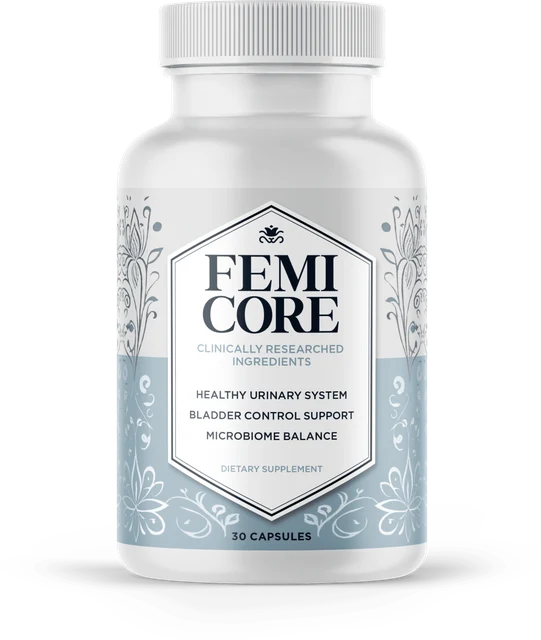
FemiCore
Once-daily women's capsule for bladder and urinary support: five Lactobacillus probiotics plus cranberry, bearberry, berberine and Mimosa pudica.