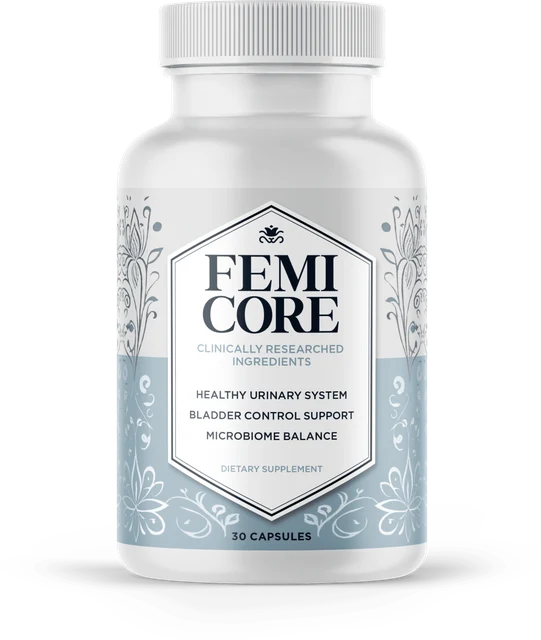
FemiCore puts nine ingredients into one daily capsule: four plant-based ingredients and five probiotic species. This page is the fast reference version, built for scanning. If you want the longer explanation of each ingredient, our FemiCore ingredients list article covers them in more depth.
Quick facts about the formula
- How it is taken: 1 capsule each morning with a big glass of water.
- Bottle size: 30 capsules, so one bottle lasts one month.
- Label wording: “Healthy urinary system, Bladder control support, Microbiome balance.”
- Blend type: proprietary. Names are listed. Amounts are not.
- Seller says: no stimulants, non-GMO.
- Trial of the finished product: none. “Clinically researched ingredients” on the label refers to studies on the ingredients in general, not on FemiCore.
All 9 ingredients in one table
The “likely role” column is our reading of how each ingredient fits the three label claims. The seller does not publish a role per ingredient. The evidence column sums up research on the ingredient by itself, never on the FemiCore capsule.
| Ingredient | Type | Likely role | Evidence level | Not disclosed |
|---|---|---|---|---|
| Mimosa pudica | Herb | Calming, antimicrobial support | Very thin: lab and animal reports only | Dose |
| Bearberry (uva ursi) | Herb | Urinary tract support | Limited and mixed in humans; traditional short-course use | Dose, arbutin content |
| Cranberry extract | Fruit extract | Urinary tract support | Moderate, for repeat UTIs in women prone to them | Dose, PAC content |
| Granular berberine | Plant compound | Microbial balance | Good for blood sugar and cholesterol; lacking for the bladder | Dose |
| Lactobacillus crispatus | Probiotic | Microbiome balance | One small trial, but of a vaginal product, not a capsule | Strain code, CFU |
| Lactobacillus acidophilus | Probiotic | Microbiome balance | General probiotic research; no bladder data for this formula | Strain code, CFU |
| Lactobacillus plantarum | Probiotic | Microbiome balance | General probiotic research; no bladder data for this formula | Strain code, CFU |
| Lactobacillus gasseri | Probiotic | Microbiome balance | General probiotic research; no bladder data for this formula | Strain code, CFU |
| Lactobacillus casei | Probiotic | Microbiome balance | General probiotic research; no bladder data for this formula | Strain code, CFU |
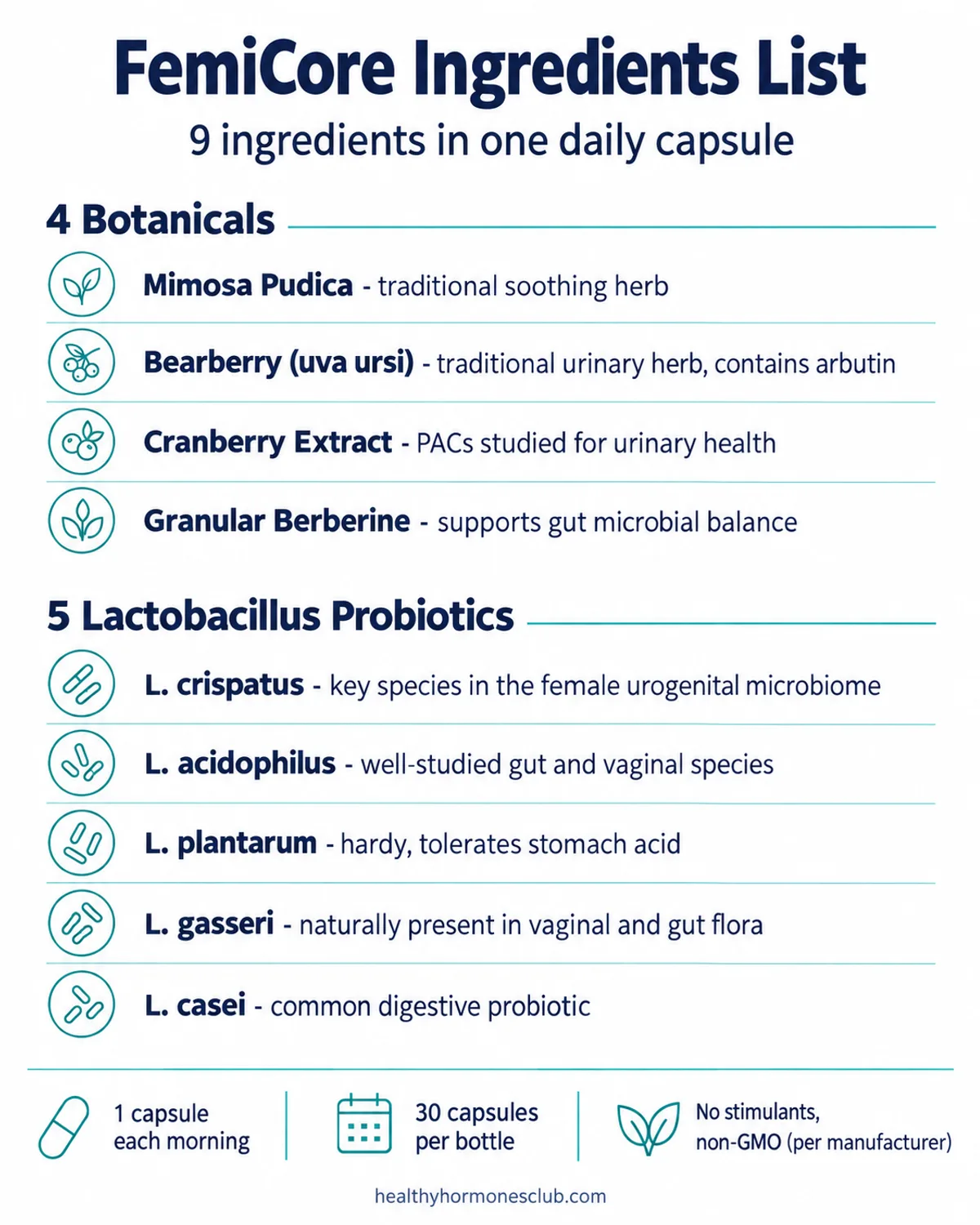
The four botanicals
Mimosa pudica
Often called the sensitive plant. Lab and animal work reports anti-inflammatory, antimicrobial and antispasmodic effects. Nobody has tested it in people for bladder symptoms. Of all nine, this one has the thinnest support.
Bearberry (uva ursi)
Bearberry contains arbutin, which the body converts to hydroquinone in the urine. In the lab, that compound is antibacterial. Human results are limited and mixed.
The bigger issue is how long it is used. European herbal regulators accept bearberry as a traditional remedy for mild lower urinary complaints, but for short courses of about a week, not for continuous use. FemiCore is designed for daily use over months, and the label does not say how much bearberry or arbutin a capsule holds. For this ingredient, the missing dose matters most.
Cranberry extract
The best studied ingredient in the formula. Cranberry’s A-type proanthocyanidins, usually shortened to PACs, make it harder for E. coli to attach to the urinary tract. A 2023 Cochrane review concluded that cranberry products can reduce repeat UTIs in women prone to them. Earlier reviews were mixed, and the effect depends on PAC dose.
Two limits apply here. The research is about infections, not leaks or urgency. And FemiCore gives no PAC figure, so you cannot compare it with the amounts used in studies.
Granular berberine
Berberine has real human data, but for blood sugar and cholesterol, typically at around 1,000 to 1,500 mg a day. Evidence for bladder health is lacking. It also brings the most drug interactions of any ingredient in the capsule, which our FemiCore safety page lays out in a table. The berberine dose is not disclosed.
Read the full FemiCore label yourself
The official store shows the bottle and the ingredient panel. Compare it with the table above before you choose a package.
See the Official Label Refund window: 60 days counted from delivery. You pay return shipping.The five probiotics
Why probiotics appear in a bladder product
Since around 2012, sequencing studies from Loyola University Chicago and other groups have shown that the female bladder is not sterile. Some of that work found fewer Lactobacillus in women with urgency incontinence. So the idea behind FemiCore is plausible. It is also early science, and it does not prove that swallowing probiotics changes bladder symptoms.
Lactobacillus crispatus
The most relevant of the five on paper. A small placebo-controlled trial found that an L. crispatus product reduced repeat UTIs. That product was used vaginally. Results from vaginal use cannot simply be applied to an oral capsule.
L. acidophilus, L. plantarum, L. gasseri and L. casei
Four common species found in many probiotic supplements. Probiotic effects depend on the exact strain, and FemiCore names species only. With no strain codes and no CFU count, you cannot link the capsule to any particular study. The NIH Office of Dietary Supplements has a plain-language probiotics fact sheet that explains how probiotics are named by genus, species and strain.
Evidence ranking for urinary use
Strongest to weakest, judged on bladder and urinary research only:
- Cranberry: moderate, for repeat UTIs in women prone to them.
- L. crispatus: one small trial, vaginal route.
- Bearberry: limited and mixed, traditional short courses.
- The other four Lactobacillus species: general research, strains unknown.
- Berberine: strong elsewhere, lacking for the bladder.
- Mimosa pudica: lab and animal data only.
Ingredients matched to each label claim
The label makes three claims. Here is which ingredients plausibly sit behind each one, and how well that link is supported.
| Label claim | Ingredients that fit it | How strong the link is |
|---|---|---|
| Healthy urinary system | Cranberry, bearberry, L. crispatus | Moderate for cranberry and repeat UTIs; weaker for the others |
| Bladder control support | Mimosa pudica, the five probiotics | Weak: lab data for mimosa, early microbiome science for the probiotics |
| Microbiome balance | The five probiotics, berberine | Plausible idea, but strains and doses are unknown |
The pattern is worth noticing. The claim most buyers care about, bladder control, rests on the weakest evidence. The claim with the best support, fewer repeat UTIs, comes from research on infections rather than leaks or urgency.
Is the formula built for daily, long-term use?
Mostly yes, with one exception. Probiotics, cranberry and berberine are usually taken daily in studies. Bearberry is the outlier: its traditional use is a short course of about a week. Because the dose is hidden, there is no way to tell whether the amount in FemiCore is small enough to make daily use a non-issue. If you plan to stay on FemiCore for months, raise this with your doctor.
What the label does not tell you
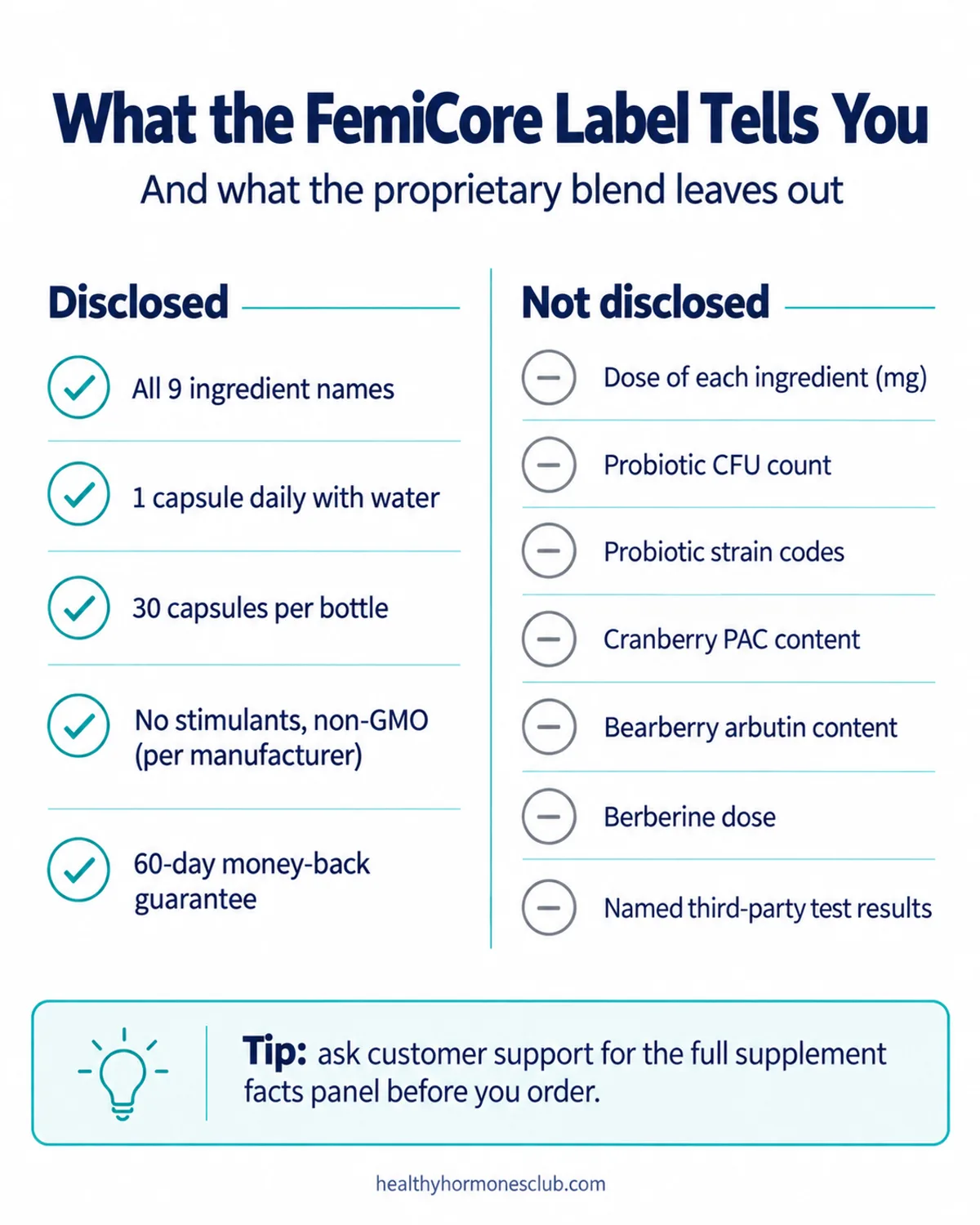
Proprietary blends are common in supplements. The trade-off is that you lose the details needed to judge the product. Use this checklist when you look at the bottle or the product page. Every item below is missing for FemiCore:
- How much of each of the nine ingredients is in one capsule
- The CFU count for the probiotics
- Strain codes for the five Lactobacillus species
- The PAC content of the cranberry extract
- The arbutin content of the bearberry
- The berberine dose
- A certificate of analysis
- The name of the manufacturer and of whoever certified the seals shown on the site
Questions worth asking the seller
If the missing details matter to you, you can ask before you buy. The support contact is on the official help pages. Useful questions:
- What is the total CFU count per capsule, and at what point is it guaranteed?
- Which strain codes are used for each of the five Lactobacillus species?
- How much cranberry PAC is in one capsule?
- How much bearberry, and how much arbutin, is in one capsule?
- What is the berberine dose?
- Is a certificate of analysis available for the current batch?
A clear answer to any of these would tell you more than the label does. If you get no answer, factor that in too.
How to use this list
- You take prescription medicine: show the nine names to your pharmacist, with berberine, bearberry and cranberry first. The safety page lists the known interactions.
- You want to know what the seller promises: the benefits page sets each claim against the evidence above.
- You are weighing cost: the price page breaks the packages down per day.
- You want our overall verdict: see the FemiCore review or go back to the FemiCore hub.
Check FemiCore on the official store
Packages run from $49 to $79 per bottle. The store sells one-off orders with no hidden autoship.
Visit the Official Store Seller's guarantee: 60 days from delivery. All bottles must be returned.FemiCore Official Bundle Pricing
The packages below are the ones listed on the official order page. Multi-bottle bundles are how the seller lowers the per-bottle price; there is no separate coupon.
2 Bottles
60-day supply
- 60-day money-back guarantee
- $9.99 US shipping
3 Bottles
90-day supply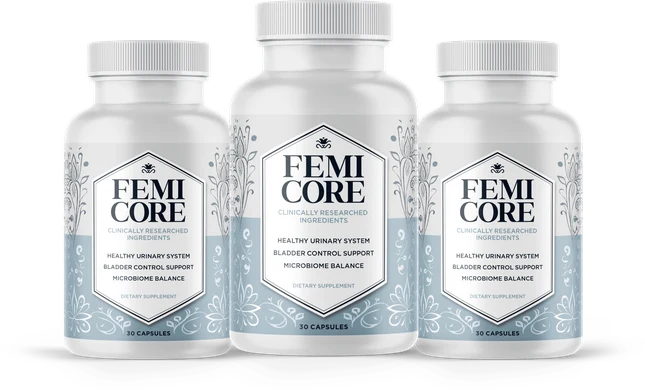
- Free US shipping
- 60-day money-back guarantee
6 Bottles
180-day supply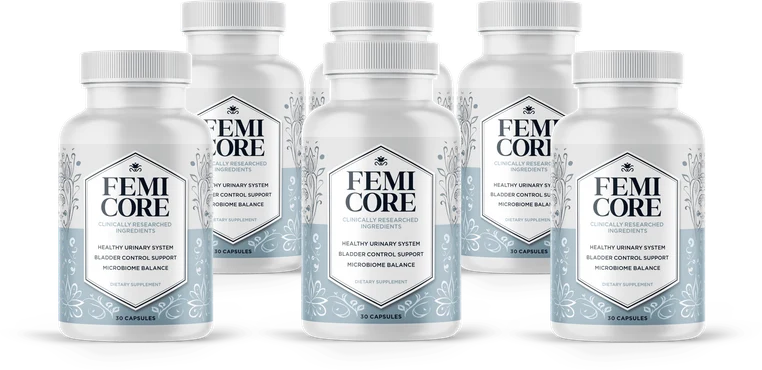
- Free US shipping
- 3 free bonus guides
- 60-day money-back guarantee
Prices as published on the official order page (checked October 8, 2026). Tax, shipping outside the US and the final total are shown at checkout, so confirm there before you pay. Crossed-out prices are the seller's own reference prices.
More on FemiCore: full guide · Women's Wellness products